
+1 512 690 0132
PUBLISHED December 2025
Although modern technologies and smart grid infrastructure are expanding, the main threats to reliability continue to be familiar issues such as outdated infrastructure, severe weather events, growing demand, and the changing dynamics of the grid.
While modern equipment upgrades and advanced sensor deployment are beneficial, utility companies can begin making meaningful improvements even before full-scale modernization is completed.
A recent audit by the Michigan Public Service Commission highlighted 75 specific actions that local utilities can take to strengthen reliability, with many focused on making better use of existing data and operational processes.
On a national level, utility companies are heavily funding infrastructure improvements, with U.S. electric utilities investing over $50 billion in distribution networks in 2023.
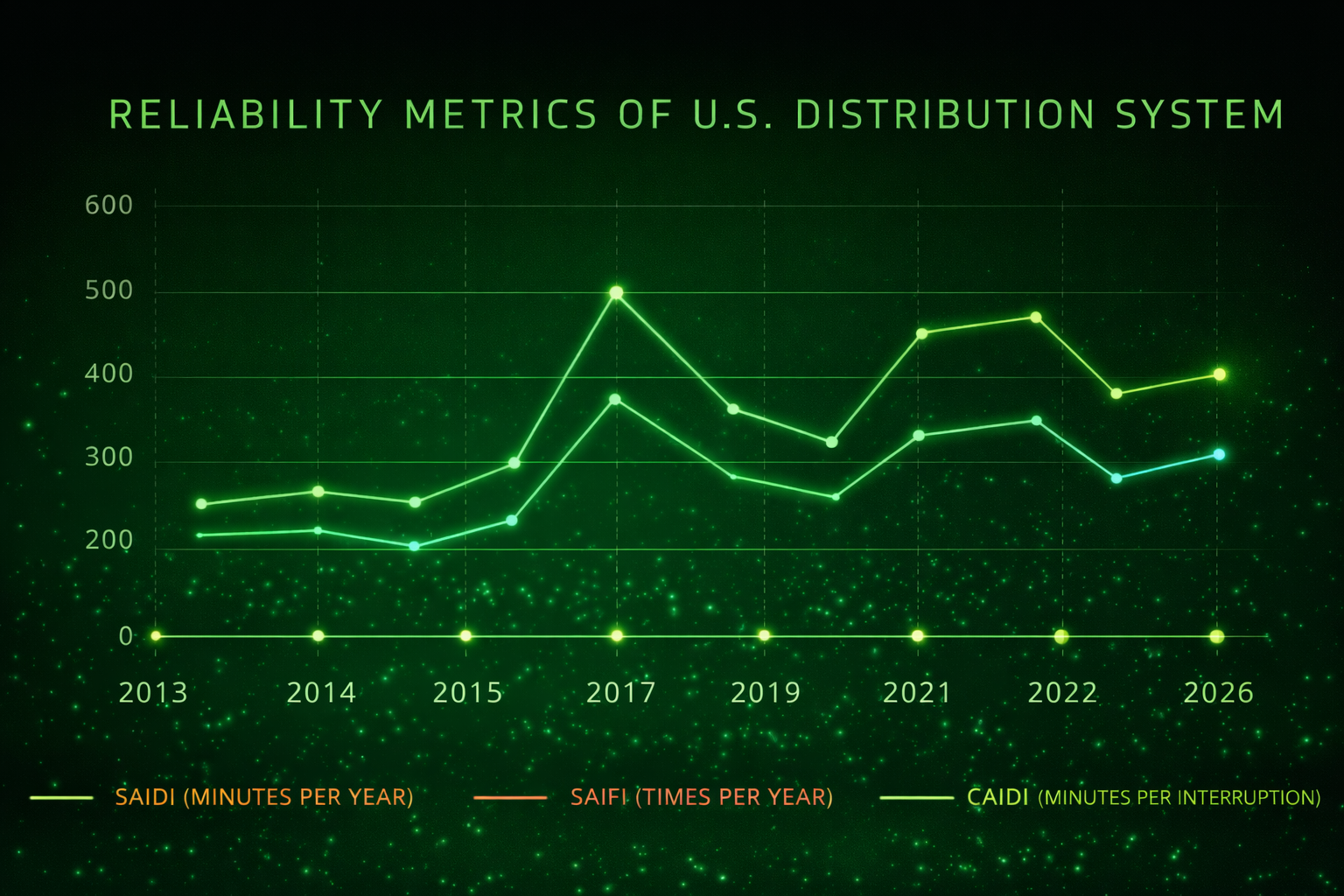
At this stage, data and analytics become essential. By applying the right methods, utilities can uncover meaningful insights from the data they already possess, without building new infrastructure.
“Despite significant changes across the industry, the core challenge remains the same—boosting reliability and at the same time cutting maintenance costs,” said Steve Brown.
This article highlights how distribution executives can utilize current data assets to enhance operational reliability and performance.
“Through advanced analytics, utilities can convert everyday data into valuable insights that support smarter decision-making,” says Brad Boyd.
“The focus shouldn’t be on waiting for flawless data or the latest tools. Instead, companies can leverage their existing data to discover issues and start solving them right away.”
Our clients often see the greatest impact from analytics in areas such as predictive maintenance and asset management.
To reduce failures and keep costs under control, utilities need a just-in-time approach to asset maintenance, yet many organizations continue to follow fixed calendar-based maintenance cycles.
“According to Brown, leading companies are shifting toward maintenance planning based on the actual health and performance of their devices.”
Companies leverage real-time sensor insights whenever possible. In the case of legacy assets, utilities evaluate inspection reports, operational history, and environmental conditions to estimate device health on a continuous basis.


Using a standardized scoring model helps identify which assets across the grid need repair or replacement first. This allows organizations to allocate limited capital and operational resources more effectively while maintaining system reliability.
Alex Carter, Principal – Industry Solutions, DC TechIdentifying the right moment for equipment replacement is critical. Replacing assets before the end of their useful life wastes resources, while operating them until failure can reduce system reliability.
Many utilities have taken the approach of simply replacing the oldest equipment. However, age, by itself, is not a good predictor of failure.
Several utilities follow a strategy of replacing assets based purely on age. In reality, age by itself does not accurately predict equipment failure.
By analyzing multiple factors, including operating environment, inspection data, maintenance records, and asset age, organizations gain deeper insights into asset condition. This helps leaders develop a more precise health assessment.
During discussions with distribution leaders, DC Tech Consulting Solutions teams often observe that organizations struggle to progress while managing a mix of legacy and modern devices.
Modern utility devices generate large amounts of real-time data, whereas legacy assets typically rely on inspection records for performance and condition insights.
Companies often find it difficult to interpret data coming from different types of assets. In many cases, insights from newer devices go unused because workflows are still built around older systems.
Leading companies are tapping into data from both their legacy and modern devices to build an integrated equipment health scoring system.
Leading organizations combine insights from legacy infrastructure and modern devices to create an integrated system for evaluating equipment health.
Integrating these insights with real-time data from intelligent devices helps create a comprehensive understanding of overall asset conditions.
The key priority we see is ensuring proper control and management of data.


From planning to execution, we support our clients with the expertise and leadership needed to advance their business. Our team works together to drive impactful change and open doors to new growth opportunities.

